
Play & Learn. Measure & Scale.
- Apr 26
- 3 min read
Sierra Leone scales results-based education with new $15m early childhood outcomes fund

Sierra Leone has launched a second national outcomes-based education fund, extending a financing approach that already delivered measurable improvements in learning and is now being scaled to the earliest years of education.
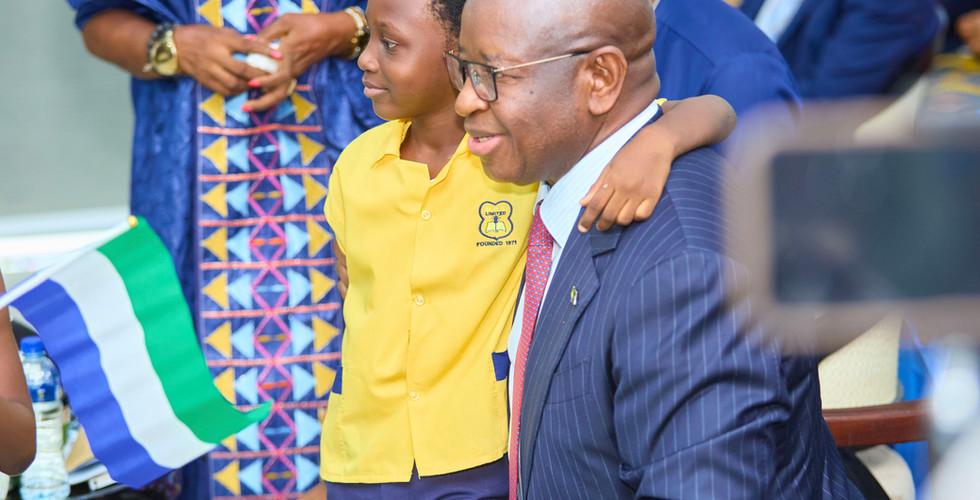
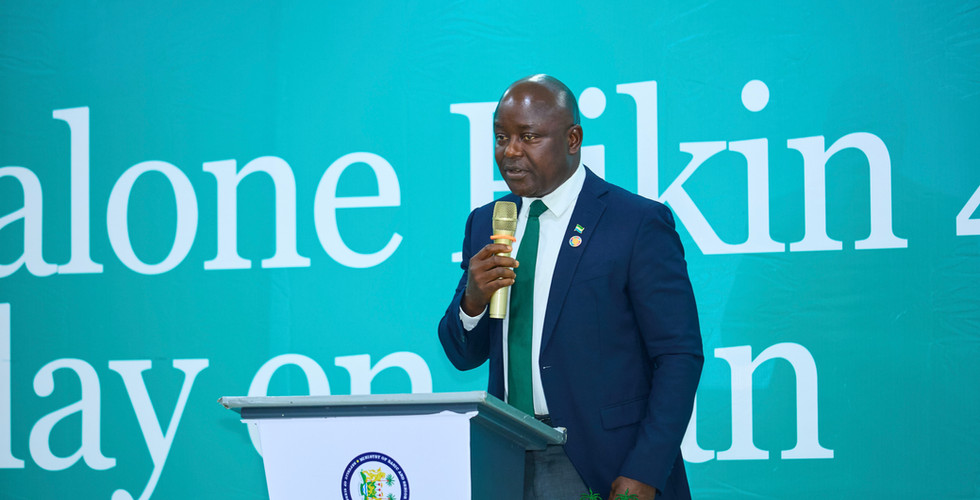
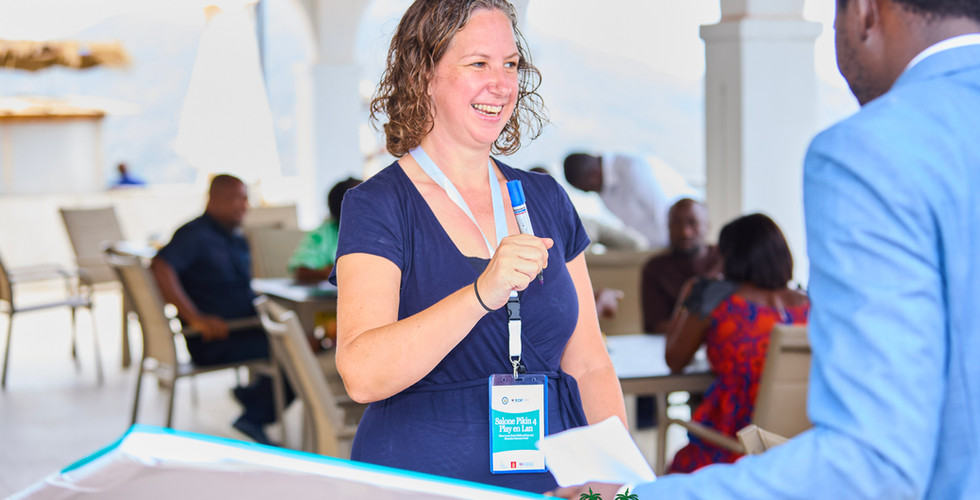
Unveiled by President Julius Maada Bio, the Salone Pikin 4 Play en Lan programme will reach more than 29,000 children aged three to five across 87 community-based early childhood centres over the next three years. The $15.3m initiative is led by the Education Outcomes Fund and the Government of Sierra Leone, through the Ministry of Basic and Senior Secondary Education, with support from the Governments of the United Kingdom and Denmark, and the LEGO Foundation.
The programme builds on the Sierra Leone Education Innovation Challenge (SLEIC), the country’s first outcomes fund, which demonstrated how linking funding to learning outcomes can drive accountability, innovation and measurable impact.
“This is not an untested idea,” President Bio said. “Through SLEIC, we have already demonstrated what happens when you anchor investment in outcomes rather than inputs. Accountability sharpens, innovation accelerates, and children benefit.”
At the core of the new fund is a continuation of that model: funding is tied to verified improvements in children’s learning and development. “We are not financing efforts. We are financing results,” the President said, positioning the approach as central to his government’s education reform agenda.
Since 2018, Sierra Leone has allocated more than 20% of its national budget to education and expanded enrolment by over one million children. The government is now turning its focus to early childhood, where the evidence shows the highest returns.
“When we invest in those early years, we change the entire trajectory of a life,” President Bio said. “That is not just early childhood policy. That is nation building.”
The Salone Pikin 4 Play en Lan programme is designed to strengthen school readiness, foundational literacy and numeracy, and socio-emotional development, particularly for children in underserved communities.
For the Ministry of Basic and Senior Secondary Education, the shift is equally clear.
“Access without quality is inefficiency disguised as focus,” said Conrad Sackey, Minister of Basic and Senior Secondary Education. “We are recalibrating our approach – from input to output, from presence to performance, from ambition to measurable impact.”
The outcomes-based model is already changing how programmes are delivered.
“Because it is outcomes-based, we are forced to think about results from the beginning,” said Muniratu Issifu, Country Director at Plan International. “It shifts the focus from activities to what children are actually achieving – and that changes everything.”
The programme is delivered in partnership with ChildFund and Plan International, with support from Bridges Outcomes Partnerships, working closely with government systems to ensure alignment with national standards and long-term sustainability.
International partners emphasised the significance of scaling a model that has already proven effective. “We have seen that improving learning outcomes is possible,” said Kate Jefferies, Education Advisor at the UK Foreign, Commonwealth & Development Office. “This programme builds on that experience and demonstrates the power of partnership in giving every child the best possible start in life.”







The Sierra Leone fund is part of a growing early childhood education and care portfolio led by EOF. Together with programmes in South Africa and Rwanda, EOF is mobilising more than $57 million to reach 170,000 children across three countries.
The South Africa ECCE Outcomes Fund represents a $29 million investment reaching 115,000 children, while Rwanda’s Nkuza Neza programme will mobilise $13 million to support 25,000 children. Sierra Leone’s new fund adds a further $15 million, extending the model to 29,000 children and reinforcing a growing body of evidence on outcomes-based financing in early learning.
At the national level, the government has also committed its own resources to the fund, reinforcing ownership of the approach. As President Bio noted, “We are investing in the human capital, future workforce, entrepreneurs and leaders of Sierra Leone.”
He also highlighted the opportunity to expand further. One component of the programme remains unfunded; with additional investment, Sierra Leone could establish 28 more centres and reach over 7,000 additional children.
“We invite partners and the private sector to be part of this,” he said. “Your investment is not charity. It is a true partnership in the future of our country.”
By expanding outcomes-based financing to early childhood education, Sierra Leone is moving beyond pilot programmes to embed results-driven funding at scale – ensuring that investments are measured not by what is delivered, but by what children achieve.